
Finch and Charlie
All the Bright PlacesThis thread traces the loyal but limited friendship between Theodore Finch and Charlie Donahue, whose humor and presence rarely overcome Finch’s concealment.
increasing Bearing strength in each event
 decreasing
Bearing strength in each eventdecreasingA Friendship Without Explanations
A Friendship Without Explanations
Accepting Finch’s rhythms
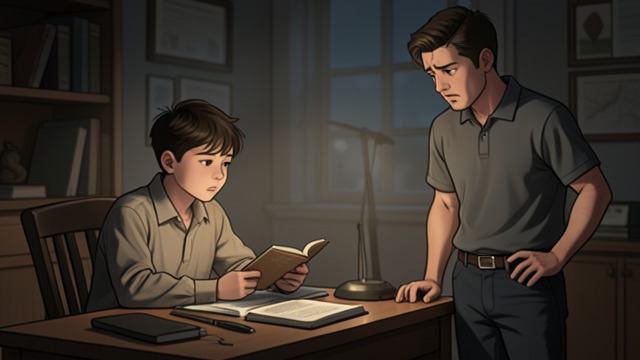
Charlie Donahue is Theodore Finch’s best friend and does not demand explanations whenever Finch disappears or behaves unusually.
Comfort and limitation
This acceptance gives Finch room to return without shame, but it also means Charlie may treat serious absence as simply Finch’s usual pattern.
Their friendship offers genuine ease while illustrating how familiarity can sometimes obscure risk.
Schoolyard Talk

Schoolyard Talk
Humor as cover
Charlie talks about sex and jokes that Theodore Finch needs to get laid, while Finch deflects questions about where he was during his absence.
A space without interrogation
Finch values not having to explain the Asleep to Charlie or Brenda Shank-Kravitz. The friendship makes ordinary conversation possible, but leaves the underlying crisis unspoken.
Their banter is both a refuge and a barrier to deeper help.
Holding Back at School
Holding Back at School
Provocation resisted
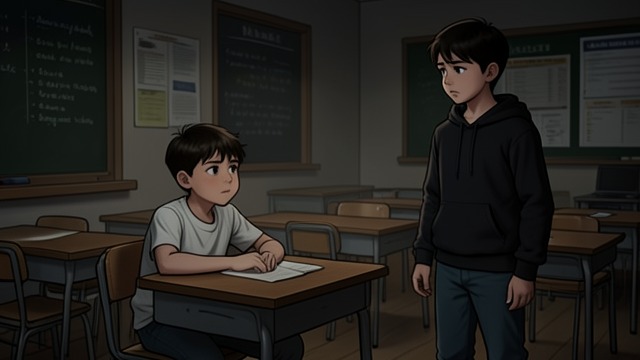
After Gabe Romero threatens and insults Theodore Finch, Finch counts instead of retaliating. His effort is partly shaped by his wish to avoid further trouble.
Charlie’s presence
Charlie remains part of Finch’s daily school life, offering conversation and a familiar witness. He does not know the full extent of Finch’s unstable moods.
The friendship supports restraint but is not a substitute for adult or clinical help.
The Final Message
The Final Message
A brief farewell
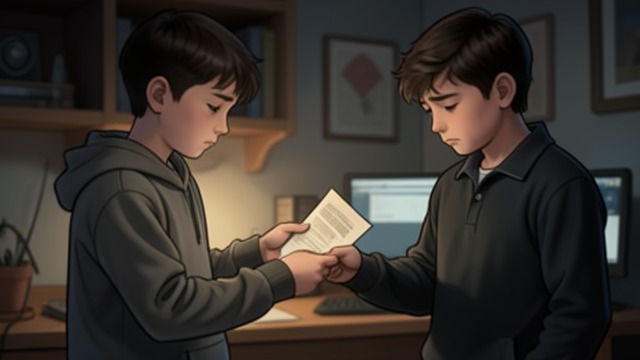
Theodore Finch sends Charlie Donahue a short message saying peace and using their familiar teasing nickname.
Ordinary language becomes evidence
After Finch disappears, Charlie and others look back at the message as one piece of a farewell sequence. It does not state a plan, but its timing makes the casual tone painful.
The friendship’s private humor remains recognizable even in the shadow of loss.
The Funeral Witness
The Funeral Witness
Anger at public grief
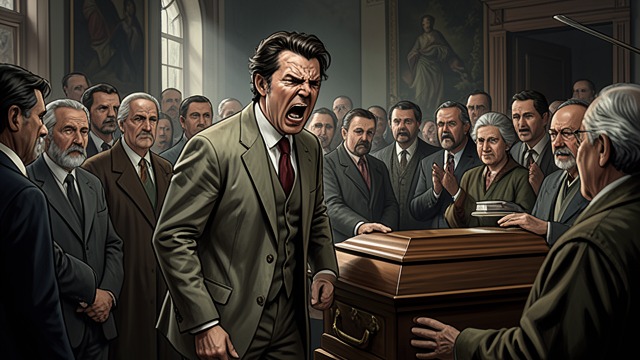
Charlie Donahue attends Theodore Finch’s funeral and calls the mourners phonies, reacting to classmates who had mocked Finch while he was alive.
A friend remains
He stands with Violet Markey and Brenda Shank-Kravitz, sharing a grief that is complicated by anger and regret. The novel gives his presence more weight than any polished tribute.
Friendship survives here as witness, not as an explanation for Finch’s death.
Early January
Early January, after the tower incident
Late January
April 26, morning
May 3
